Compex Wireless USA 2.0 Muscle Stimulator with TENS Kit
✓ Authorized Compex Dealer
✓ Lowest Price Guaranteed
✓
FREE & FAST Shipping: In Stock and Ready to Ship
✓ Questions? Call an RFA Team Member:
1-855-864-6442
✓ Authorized Compex Dealer
✓ Lowest Price Guaranteed
✓
FREE & FAST Shipping: In Stock and Ready to Ship
✓ Questions? Call an RFA Team Member:
1-855-864-6442
Compex · Muscle Stimulator · Wireless USA 2.0
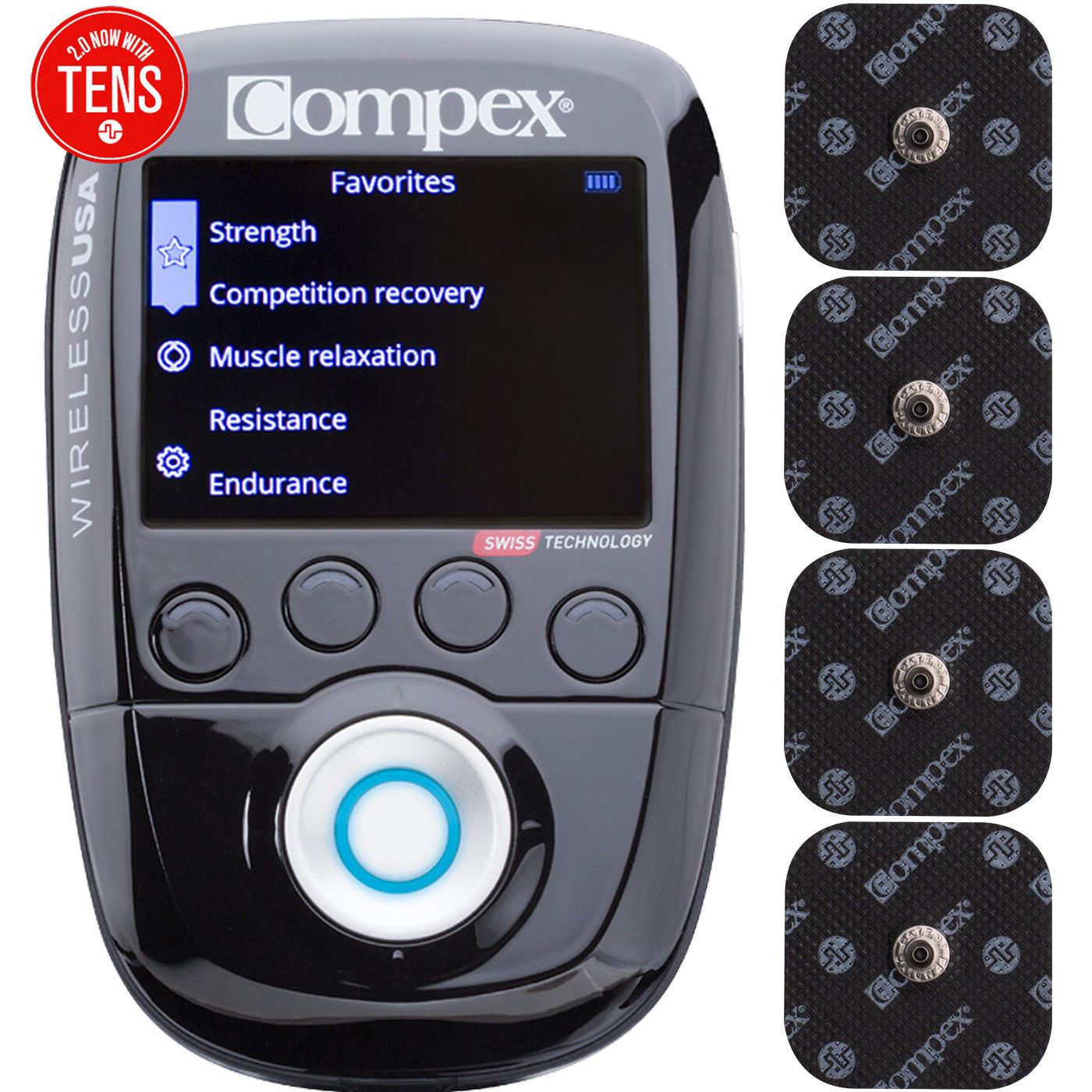
Wireless electrode pods. FDA 510(k) cleared. Four strength programs (Endurance, Resistance, Strength, Explosive Strength), three recovery programs (Active Recovery, Recovery Plus®, Muscle Relaxation), two warm-up programs (Prewarm Up, Potentiation), and a TENS program for pain relief.
The Wireless USA 2.0 is Compex's flagship wireless EMS + TENS device — the same electrical muscle stimulation technology used across strength training, recovery, and pain management, delivered through pods that clip directly to the electrode without a cable running back to the handset. Ten pre-designed programs cover a full training cycle: prime the muscle before a session, drive powerful contractions during it, and flush the muscle afterward. The TENS program stimulates sensory nerves for pain relief through endorphin release and the Gate Control mechanism, not muscle contraction. Three levels of progression let the same device serve a first-time user and a competitive athlete.
Compex EMS delivers a current at a frequency tuned to fire motor nerves — the same nerves the brain uses to recruit a muscle during a heavy lift. The muscle contracts because it's being told to, not because it's being tricked into it. TENS runs on the same device but targets sensory nerves for pain relief, not contraction.
The Resistance, Strength, and Explosive Strength programs are tuned to recruit Type II muscle fibers — the ones responsible for power and force. Voluntary lifting struggles to recruit Type II under submaximal loads. EMS bypasses the recruitment ceiling by activating the fibers directly.
Active Recovery and Recovery Plus® don't contract the muscle. They run at low-frequency twitches that increase circulation and accelerate the exchange between fatigued fibers and fresh blood — clearing lactic acid, delivering oxygen and nutrients, reducing DOMS.
Low-frequency TENS triggers endorphin release. High-frequency TENS blocks pain signals to the brain via the Gate Control mechanism. The Compex TENS program pulls from both pathways to decrease pain intensity and improve motion and function.
The Strength and Explosive Strength programs drive Type II fiber recruitment at a frequency the muscle can't self-generate under voluntary contraction. Result: more force production without stacking more plates on the bar.
Compex-driven contractions mimic a heavy compound lift — but the load never passes through the spine, knees, or shoulders. The joints get a rest day; the muscle doesn't.
Recovery programs increase muscle blood flow through low-frequency twitches — clearing lactic acid, moving fresh oxygen and nutrients through, and reducing next-day soreness (DOMS) from hard training or long travel days.
Prewarm Up and Potentiation prime the muscle before a session. Four strength programs drive the session. Three recovery programs handle post-workout. TENS handles pain when it flares up. Four use cases, one wireless unit, three progression levels.
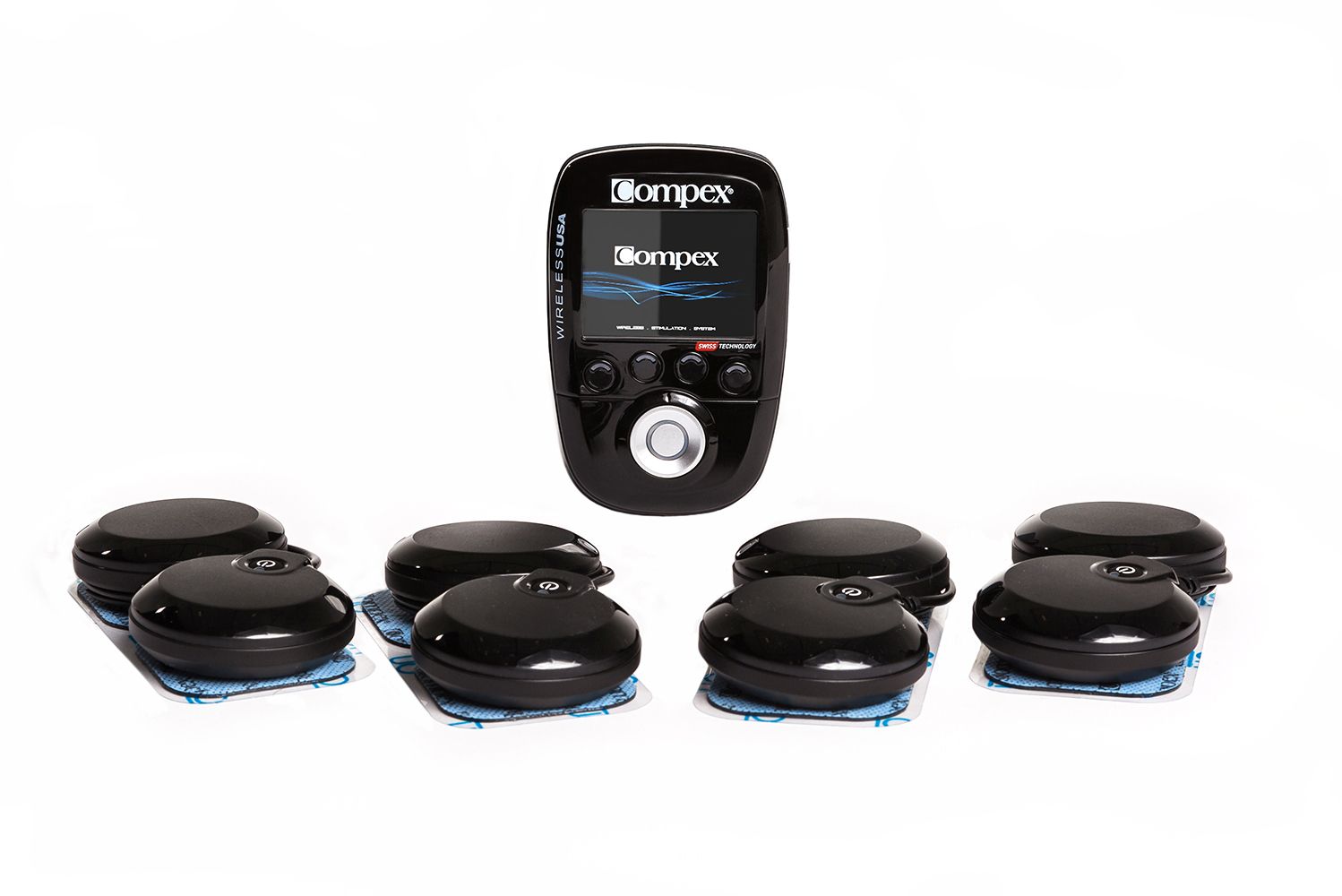
Each electrode pod clips directly onto its skin pad. No lead wires running down the leg, no cable snagging on a bench or a bike. Move freely through a mobility session, a warm-up, or a recovery ride while the pods do their work.
Nine EMS programs drive muscle contraction — for strength, warm-up, and recovery. The tenth program is TENS, which does not contract the muscle at all. TENS stimulates sensory nerves for pain relief through endorphin release and the Gate Control mechanism. One device, two entirely different clinical use cases.
Every program runs on a beginner, intermediate, and competitive level. The same Wireless USA 2.0 that a first-time user runs at Level 1 becomes a serious training tool at Level 3 — no new device, no new pods, no upgrade path required.
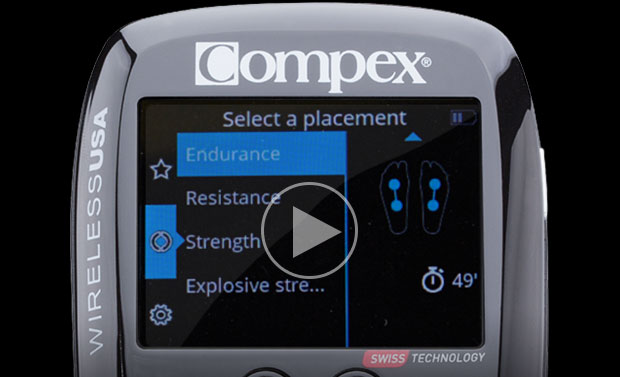
Four strength-building programs, three recovery programs, two warm-up programs, and one TENS program for pain relief. What each does and when to use it.
Builds slow-twitch muscle fibers. Helps you cope with long-duration aerobic activities and increases muscle resistance to fatigue.
An all-around program for endurance and strength. Builds both slow-twitch and fast-twitch muscle fibers.
Increases sheer muscle strength — better than most conventional weightlifting alone, with less risk of muscle-tendon injury.
Drives fast-twitch (Type II) fiber recruitment for power and speed — the fiber population responsible for explosive movement.
Warms muscles faster without psychological, muscular, or cardiovascular fatigue. Runs at a frequency tuned to increase blood flow — does not contract the muscle.
Recommended right before a workout or competition — especially for speed and velocity sports. Applied briefly, it delivers well-potentiated muscle fibers ready for maximum performance.
Low-frequency twitches deliver fresh oxygen and nutrients, help clear lactic acid, and reduce DOMS. Does not contract the muscle.
Facilitates muscle relaxation and reduces soreness and stiffness following competition or demanding workouts.
A gentler recovery program. Reduces muscle soreness and stiffness — closer to a massage sensation than a workout.
Stimulates sensory nerves to decrease pain intensity and increase motion and function. Works through endorphin release (low-frequency TENS) and Gate Control (high-frequency TENS).
EMS (Electrical Muscle Stimulation) targets motor nerves to make the muscle contract — the same way the brain fires it during a heavy lift. It builds strength, primes the muscle for training, and drives recovery. TENS (Transcutaneous Electrical Nerve Stimulation) targets sensory nerves to relieve pain — it does not contract the muscle. The Wireless USA 2.0 runs both: nine EMS programs plus one TENS program for pain relief.
Two mechanisms. Low-frequency TENS triggers the body's release of endorphins — natural painkillers. High-frequency TENS uses the Gate Control mechanism to block pain signals from reaching the brain. The Compex TENS program helps decrease the intensity of pain and increase motion and function.
Yes — the mechanism is direct fiber recruitment. The Resistance, Strength, and Explosive Strength programs activate fast-twitch (Type II) muscle fibers, the fibers responsible for power and force. Voluntary lifting under submaximal loads struggles to fully recruit Type II fibers. EMS bypasses that ceiling. Increases in sheer muscle strength happen better than most conventional weightlifting alone, with less risk of muscle-tendon injury from load on the joints.
The recovery programs run at low frequencies that do not contract the muscle. They drive small twitches that increase blood flow — clearing lactic acid, delivering fresh oxygen and nutrients, and speeding the exchange between fatigued fibers and blood. The result is a faster reduction in soreness (DOMS) and quicker return to next-session readiness.
Every program runs at three levels — beginner, intermediate, and competitive. The device grows with the user: a first-time user runs at Level 1, and the same Wireless USA 2.0 handles a serious athlete at Level 3. No new device or upgrade needed.
Yes. The Compex Wireless USA 2.0 holds FDA 510(k) clearances K162517, K141260, K083140, and K143551.
Compex Wireless USA 2.0 stimulator, wireless electrode pods, charging station, wireless wall charger, 2×2 in and 2×4 in black electrode pads, carrying case, and user guide.
2-year warranty on the stimulator, pods, and charging base — extends to 3 years if the device is registered with Compex. 60-day warranty on accessories (carrying case, charger, electrodes). 30-day money-back guarantee on the full kit from delivery.
Athletes and active people who want a single device covering warm-up, strength, recovery, and pain relief without wires running down the leg or arm. Because the device has three progression levels, it fits first-time users through competitive athletes. The wireless pods make it especially usable during movement — mobility work, warm-ups on the bike, recovery sessions on the couch.