

Skip to content

Kinvent K-Pull

by Kinvent
Original price $1,390.00 - Original price $1,390.00
Original price
$1,390.00
$1,390.00 - $1,390.00
Current price $1,390.00

✓ Authorized Kinvent Dealer
✓ Lowest Price Guaranteed
FREE & FAST Shipping: In Stock and Ready to Ship
✓ Questions? Call an RFA Team Member: 1-855-864-6442

Traction Dynamometer

Kinvent K-Pull

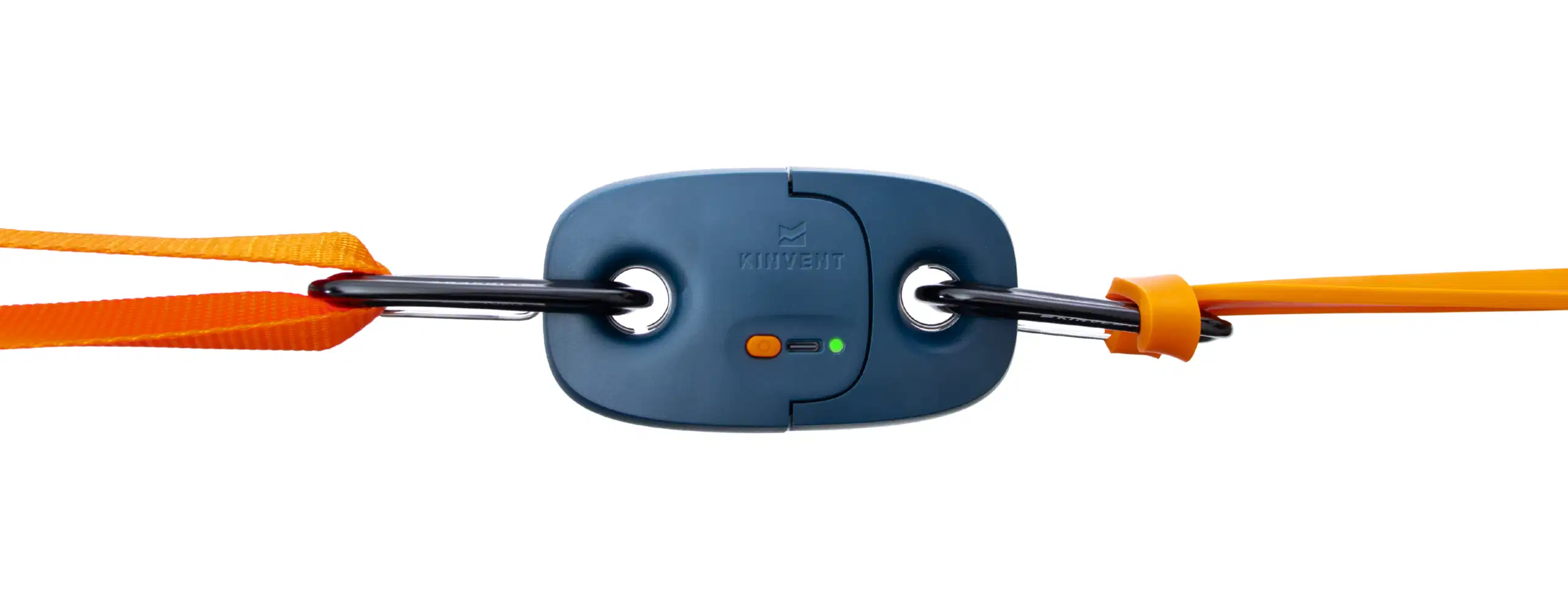
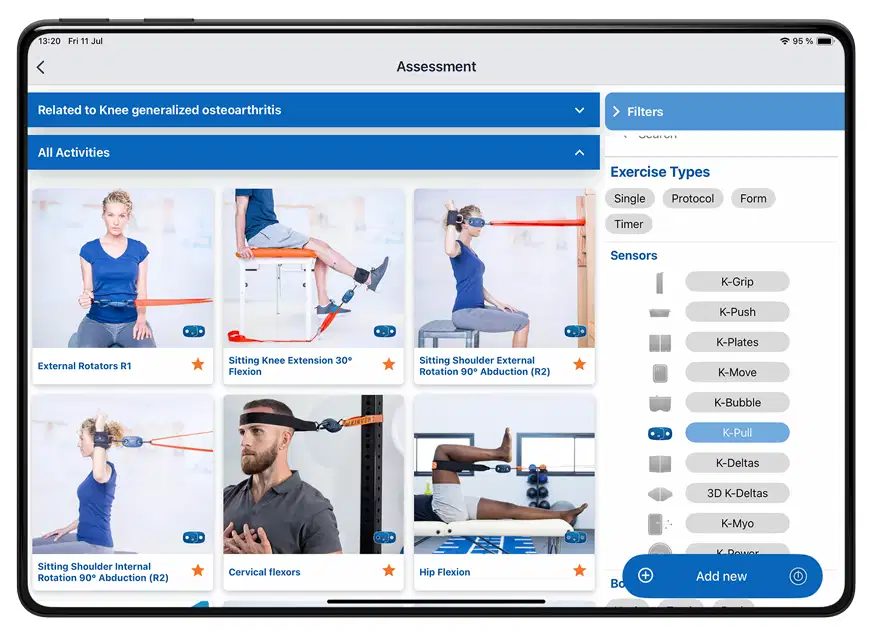
K-Pull sits in a line and reads tension. The sensor goes between an anchor point and a strap, handle or bar, and whatever the athlete pulls against it registers as tensile force. The K-Force app shows the pull as a live trace and keeps every attempt.

Loading through an anchor keeps the tester out of the load path, so the ceiling on the reading belongs to the athlete alone. That is what makes traction the right route for the powerful muscle groups: an isometric mid-thigh pull, a Nordic hamstring test, or a resisted hold at whatever angle the accessory kit lets you set up.

Reads
Tensile force
Traction along a line
Setup
Anchored
Operator-independent readings
Weight
2.84 lbs
Published sensor weight
Dimensions
10.83 x 5.19 x 6.69
Inches, as published
Force in tension IMTP and Nordic hamstring setups Accessory kit for any angle Bluetooth, 2.84 lbs
Kinvent K-Pull

Why Traction

The Tester Steps Out Of The Line

A pulled measurement is bounded by the anchor and the athlete. Nobody has to brace against the effort for the number to be valid.

🔗
Operator-independent readings
With the sensor anchored, the figure reflects what the athlete produced against a fixed point. Two staff members running the same protocol are running the same test.
Anchored in line
🏋
Built for the big movers
Traction is how you get at hip, thigh and trunk musculature that produces more force than a handheld pad can take. Mid-thigh pull and hamstring work are the setups this sensor exists for.
IMTP and Nordic
📏
Any angle you can rig
The included accessory kit provides the attachment points, so the pull direction is whatever the anchor and the strap length allow. Positions repeat between sessions once the rig is written down.
Accessory kit included
📶
Clinic, gym or pitch side
At 2.84 lbs with a Bluetooth link to a phone or tablet, the working kit is the sensor, the straps and a screen. Nothing needs mains power or a fixed installation.
2.84 lbs

What It Puts On Record

Maximum, Endurance And The Ratio Between Them

For strength and conditioning departments, sports medicine staff, rehabilitation clinics and research teams testing the muscle groups that produce the most force.

🔥
Force peak from a maximal pull
Maximum
Strength held over a set duration
Endurance
Ratios between paired positions
Ratios
Left and right compared on one rig
Symmetry
👥
Repeatable between two testers
Operator free
📈
A trace of the whole pull from start to end
Curve
🏎
Travels to the training ground
Portable
📱
Filed in the profile with other sensors
K-Force

Closer Look

Setting Up A Pull

Kinvent K-Pull
The Rig

Anchor, Strap, Sensor, Athlete

The sensor is placed in series between a fixed point and whatever the athlete holds or braces against. Change the anchor height or the strap length and the same device covers a different joint angle, which is how one unit serves lower limb, trunk and upper body positions.

  • Tensile force measured along the line of pull
  • Accessory kit supplies the attachment points
  • Angle set by anchor position and strap length
  • Reading unaffected by the tester's own strength
  • Sensor weighs 2.84 lbs, published at 10.83 x 5.19 x 6.69 in
Traction Anchored Any angle
Kinvent K-Pull
The Protocols

Mid-Thigh Pull, Nordic And Held Efforts

Kinvent list the isometric mid-thigh pull, the Nordic hamstring test and resisted strength work among the setups this sensor supports. Each produces a peak, and a timed effort adds the average force sustained, which is the figure that describes how long the output lasts.

  • Isometric mid-thigh pull
  • Nordic hamstring test
  • Resisted strength exercises
  • Average force across a timed effort
  • Strength ratios and side comparisons in the app
IMTP Nordic K-Force app

The Range

The Rest Of The Dynamometer Range

The app is common to all four. Choose by the direction the force travels and the muscle groups you test most.

Kinvent K-Push
K-Push
Handheld dynamometer for isometric muscle strength.
Isometric strength Handheld K-Force app
Shop the K-Push
Kinvent K-Grip
K-Grip
Grip dynamometer for grip strength and fatigue.
Grip strength Peak force K-Force app
Shop the K-Grip
Kinvent K-Bubble
K-Bubble
Pneumatic sensor for pressure and muscle activation.
Pressure Activation K-Force app
Shop the K-Bubble
You're Here
Kinvent K-Pull
K-Pull
Traction dynamometer for tensile force.
Tensile force Traction K-Force app
Currently viewing

Questions

Frequently Asked Questions

Tensile force, meaning force in traction along the line the sensor sits in. It records the force peak of a maximal effort and the average strength maintained over an effort of a length you set.
The sensor anchors to a fixed point and nobody has to brace it by hand, which keeps the tester's own capacity out of the recorded value. Kinvent describe this as performing operator-independent measurements, and it is the practical reason to reach for traction on the large muscle groups.
Kinvent name the isometric mid-thigh pull, the Nordic hamstring test and resisted strength exercises. Anything else you can rig between an anchor and an athlete follows the same principle.
Kinvent describe the unit as engineered to withstand high forces but publish no capacity figure we can cite for this listing. The published specification covers 2.84 lbs and 10.83 x 5.19 x 6.69 in, so those are the numbers we state.
By where you anchor and how long the strap runs. The included accessory kit carries the attachment hardware, and once a rig is recorded it can be reproduced the same way at the next session.
Yes. Kinvent point to the average strength maintained for a given length of time as the indicator that describes endurance, and reading it against the peak from the same athlete describes how much output holds up across the effort.
Running paired positions on the same rig gives the app two values to hold together, whether that pair is a left and a right or two positions in a ratio. Keeping the rig identical between the two is what makes the comparison worth anything.
A Bluetooth link to the K-Force app on a phone or tablet, and no other equipment. The trace draws while the athlete is pulling, which is when a tester can tell a clean effort from a jerked one.
Clinic rooms, gym floors and pitch side, since it runs on battery and pairs to a handheld screen. The only fixed requirement is something solid to anchor against.
Strength and conditioning departments, sports medicine staff, rehabilitation clinics and research groups. The device supplies force data; the protocol and its interpretation belong to whoever is running the testing.
Where the athlete can out-push the person holding the device, traction is the better route, so hip and thigh work belongs on K-Pull. K-Push stays quicker for the many positions where a handheld pad is enough, and its published range is 90 kg at 0.1 kg. Plenty of clinics keep both and choose by muscle group.
  • Measures: tensile force in traction
  • Load capacity: Kinvent publish no capacity figure for this listing, so none is quoted here
  • Dimensions: 10.83 x 5.19 x 6.69 in, the same figures Kinvent publish for the K-Push
  • Weight: 2.84 lbs
  • Connectivity: Bluetooth
  • App: K-Force app on a phone or tablet
  • What it records: peak force, average force over a timed effort, strength ratios and side-to-side comparison
  • Measures: tensile force, read along the line of pull between an anchor and a strap, handle or bar
  • Setup: the sensor sits in series with a fixed point, so the tester stays out of the load path
  • Angle: set by anchor height and strap length, which lets one unit cover lower limb, trunk and upper body positions
  • Protocols listed by Kinvent: isometric mid-thigh pull, Nordic hamstring test and resisted strength exercises
  • Parameters: peak force per effort, plus average force sustained across a timed effort
  • Comparisons: paired positions give the app strength ratios and left against right
  • Live trace: the pull draws on screen in the K-Force app while it is happening
  • Connection: Bluetooth to a phone or tablet, with no other equipment needed
  • Weight: 2.84 lbs, published at 10.83 x 5.19 x 6.69 in
  • Who uses it: strength and conditioning departments, sports medicine staff, rehabilitation clinics and research teams
  • 1 K-Pull traction dynamometer
  • Accessory kit: Kinvent list an accessory kit supplying the attachment points, without itemising its contents