

Kinvent K-Bubble
✓ Authorized Kinvent Dealer
✓ Lowest Price Guaranteed
✓
FREE & FAST Shipping: In Stock and Ready to Ship
✓ Questions? Call an RFA Team Member:
1-855-864-6442
✓ Authorized Kinvent Dealer
✓ Lowest Price Guaranteed
✓
FREE & FAST Shipping: In Stock and Ready to Ship
✓ Questions? Call an RFA Team Member:
1-855-864-6442
Pneumatic Sensor
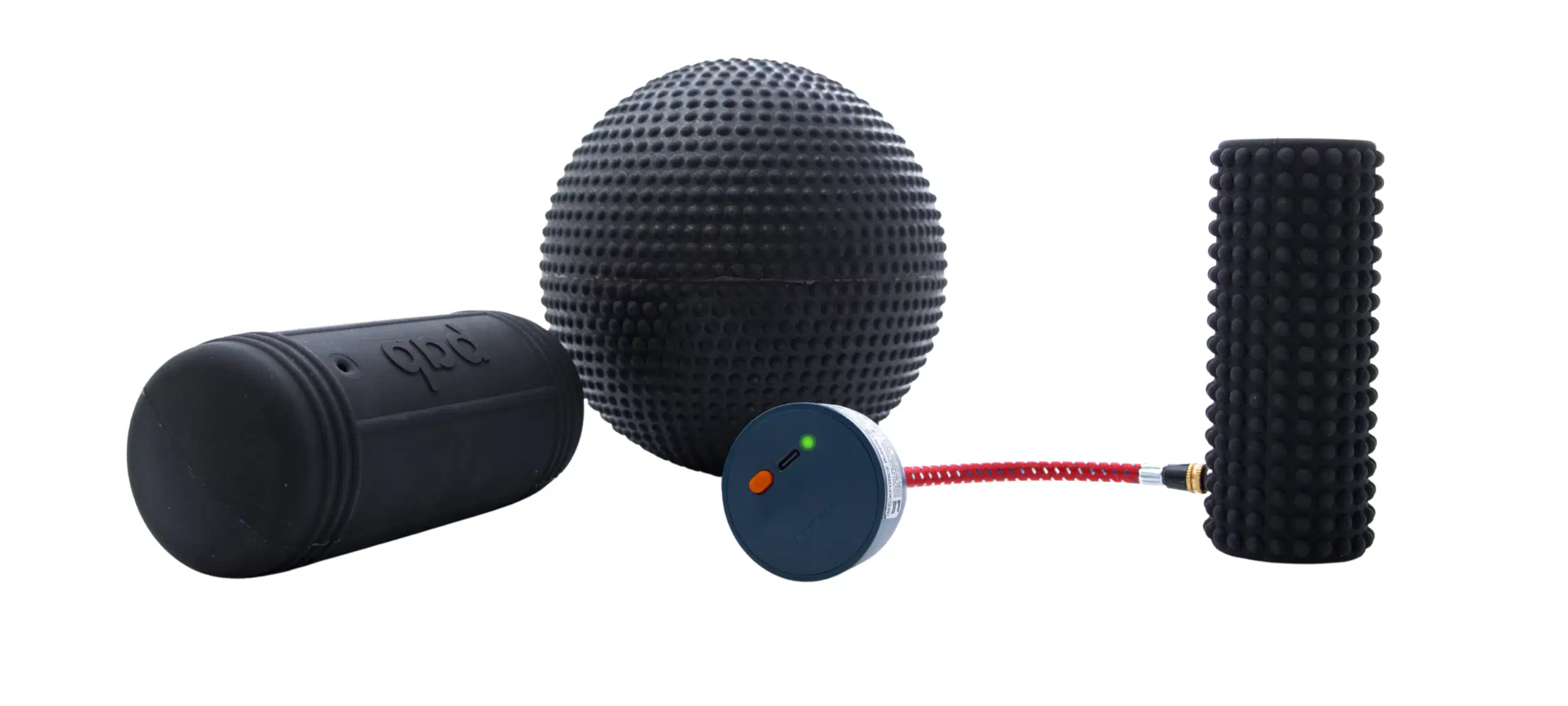
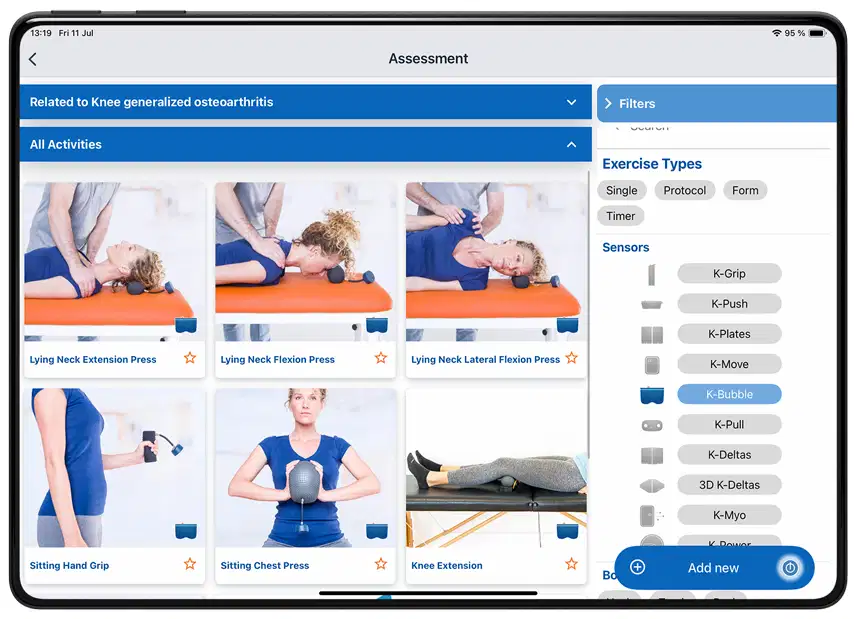
K-Bubble works on air. Plug the sensor into an inflatable ball or cushion, have the body part press into it, and the change in internal air pressure becomes a force figure in the K-Force app. Pressure arrives as a continuous trace, so the effort is visible from the first moment of contact.
That pneumatic route suits positions where a rigid pad has nowhere to sit. A ball between the knees captures adductor effort. A cushion behind the head captures work at the cervical spine. Inflating the accessory harder or softer sets how much resistance the body meets before the reading starts to climb.
The Mechanism
The sensing element sits in the air line, which is why the contact surface can be soft, curved and any size the accessory allows.
Where It Earns Its Place
For clinics and performance departments that need a force figure from positions where a rigid pad has nowhere to sit.
Closer Look
Connected to an inflatable touch ball, K-Bubble reads what happens when the ball is compressed between two limbs or between a limb and a surface. Adductor testing is the classic use, and the ball adapts to the space available between the limbs, so the contact angle follows the position you need.
Swap to an inflatable cushion and the same sensor covers pressing efforts at the cervical spine and anywhere else a curved, padded contact makes the position workable. The trace on screen updates continuously, so a slow build and a sharp spike look different from each other.
The Range
One app runs all four. Each takes force in by a different route, and the route decides which tests it suits.
Questions