

Kinvent K-Deltas
✓ Authorized Kinvent Dealer
✓ Lowest Price Guaranteed
✓
FREE & FAST Shipping: In Stock and Ready to Ship
✓ Questions? Call an RFA Team Member:
1-855-864-6442
Mon-Fri: 9am-6pm EST
✓ Authorized Kinvent Dealer
✓ Lowest Price Guaranteed
✓
FREE & FAST Shipping: In Stock and Ready to Ship
✓ Questions? Call an RFA Team Member:
1-855-864-6442
Large Format Force Plates
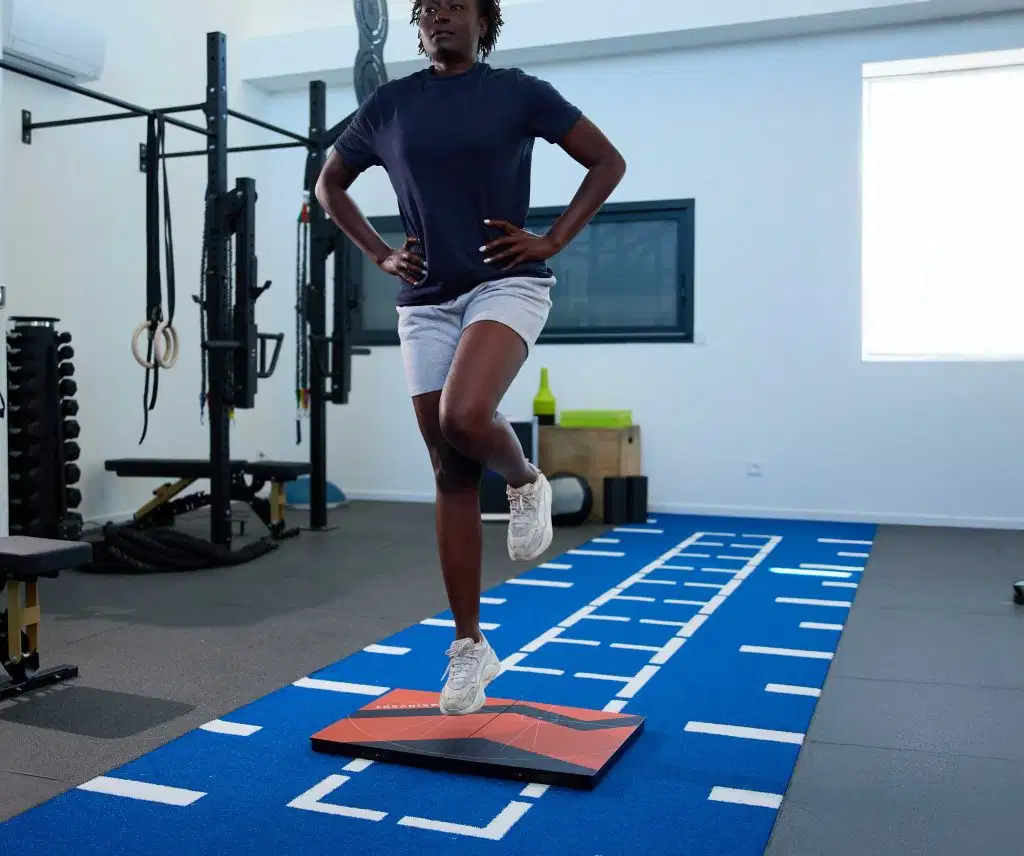
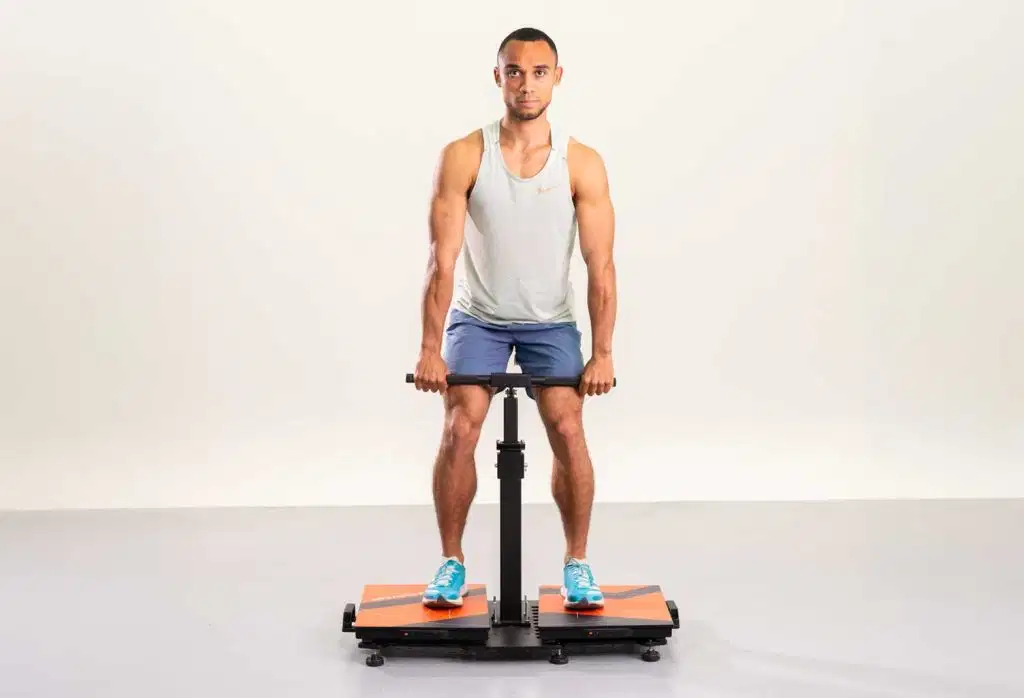
K-Deltas are a pair of large-surface platforms Kinvent build for functional assessment and vertical jump analysis. Each plate reads force independently, so a two-footed task produces two force records and the app reports the difference between sides. One set covers balance and postural stability, load distribution, isometric strength and jump testing.
Kinvent publish a capacity of 2000 kg per platform, an accuracy figure of ±0.1%, a sampling rate of 1000 Hz / 2000 Hz (Full CoP) and 20 hours of continuous operation per charge. A rate in that band is what makes the short impulse phase of a jump readable as a curve rather than a single number at the end of it.

The Published Numbers
Every figure below is one Kinvent state for these platforms. Where they publish nothing, this page says nothing.
What Comes Back
Kinvent name load distribution, maximal force, impulse, the force-velocity profile, DSI, and take-off and landing quality among the key metrics these plates return.
Closer Look

Kinvent name three jump protocols on these plates: the countermovement jump, the squat jump and the drop jump. Each one loads the athlete differently, and the plates record the whole trial rather than the result at the top, so a session shows impulse and the shape of the force build alongside the height. The force-velocity profile and DSI come out of the same testing.

Because the two plates read independently, any bilateral task becomes a two-channel measurement and the app reports the Limb Symmetry Index between them. Single-leg protocols run on one plate at a time, which is the format return-to-sport testing usually asks for. Kinvent list single-leg balance and single-leg jump work alongside the double-leg versions.

The same platforms run the isometric side of a testing battery. Kinvent name the isometric mid-thigh pull, the ASH test and the McCall test, all of them measuring the ability to produce and hold maximal force while the split between limbs stays visible. Pair an isometric peak with a ballistic peak from the jump testing and DSI follows from the two.

Before anyone jumps, the plates record what a quiet stance looks like. Kinvent list postural stability and balance strategies under static conditions, centre of pressure position and velocity, and load distribution across the pair. The same surface carries functional movement work: squats, bridges, push-ups and sit-to-stand.

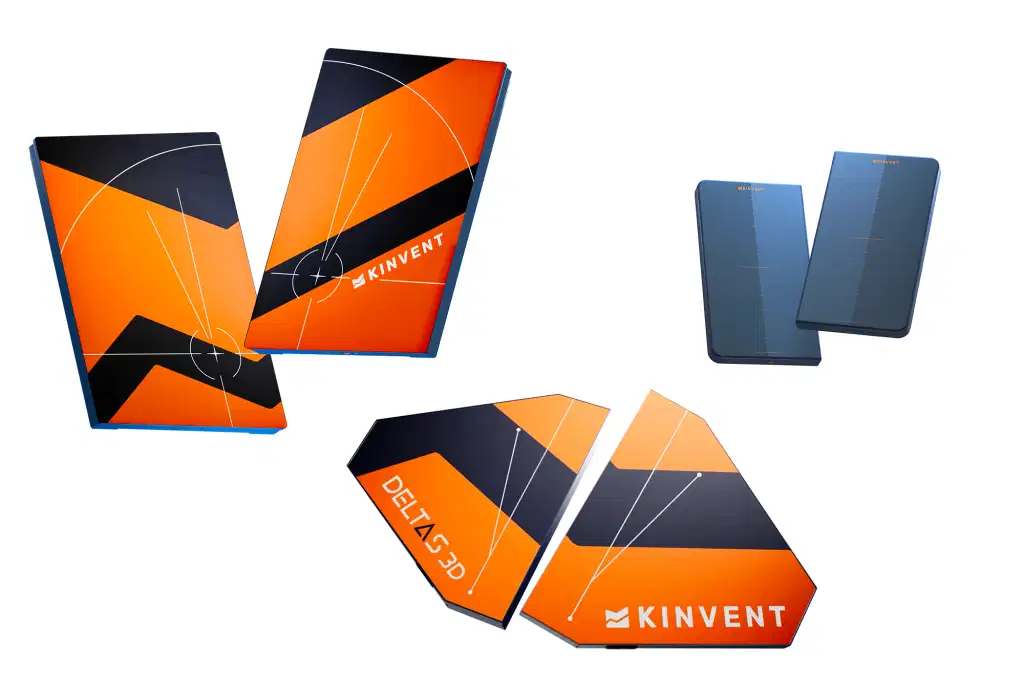
K-Deltas work as a pair, and this listing carries two surface sizes. The standard platform is listed at 27.56" × 8.66" × 18.9" and 66.14 lbs; the XL option is listed at 36.61" × 8.27" × 22.83". A larger surface gives a wider margin for single-leg landings and loaded positions, which is the reason Kinvent build the surface area up in the first place.
Where They Get Used
Kinvent list physical therapists, sports performance professionals, physicians and researchers among the users, working in the settings below.
The Kinvent Lineup
Surface size and what each system is built to capture are what separate these three. Match the system to the task you test most often.


Full Spec Sheet
Trusted & Certified
These are the certifications and registrations Kinvent publish for their platform and their quality and information security systems. They cover the company and its medical device and data handling, not a performance claim about this sensor.
Who Uses Kinvent
Kinvent name the following among the organizations working with their sensors. The list is theirs, published on their own product pages.
Questions
placeholder