

Kinvent K-Power Velocity Training Sensor
✓ Authorized Kinvent Dealer
✓ Lowest Price Guaranteed
✓
FREE & FAST Shipping: In Stock and Ready to Ship
✓ Questions? Call an RFA Team Member:
1-855-864-6442
Mon-Fri: 9am-6pm EST
✓ Authorized Kinvent Dealer
✓ Lowest Price Guaranteed
✓
FREE & FAST Shipping: In Stock and Ready to Ship
✓ Questions? Call an RFA Team Member:
1-855-864-6442
Sprint Times And Bar Speed
K-Power is a motion sensor that pairs an inertial measurement unit with ultra-wideband radio, and it records distance, speed and power. Kinvent give it two modes. Sprint Mode returns top speed, average and peak power, and split times at 10, 20 and 30 meters. VBT Mode returns average bar speed for each repetition, average and peak power, and the range of motion of the lift.
800 Hz is the capture rate Kinvent publish for this sensor. The unit is wireless, runs indoors and outdoors, and is listed at 2.2 lbs. Feedback comes back in two channels at once, color-coded and audio-coded, so an athlete reads a repetition without leaving the bar. A tripod stand accessory ships with the K-Power unit. Kinvent call it the first hybrid sprint and velocity based training sensor. The readers here are strength and conditioning staff, sports medicine teams and researchers.

Inside The Sensor
Kinvent publish four things about how this unit works: what senses the movement, how fast it samples, what each mode reports, and how the result reaches the athlete. Those are the figures to read before it goes into a session plan.
The Sprint Report
These are the fields Kinvent's sprint test report returns. Every one of them lands in the app the moment the athlete crosses the finish, with no export and no stopwatch.

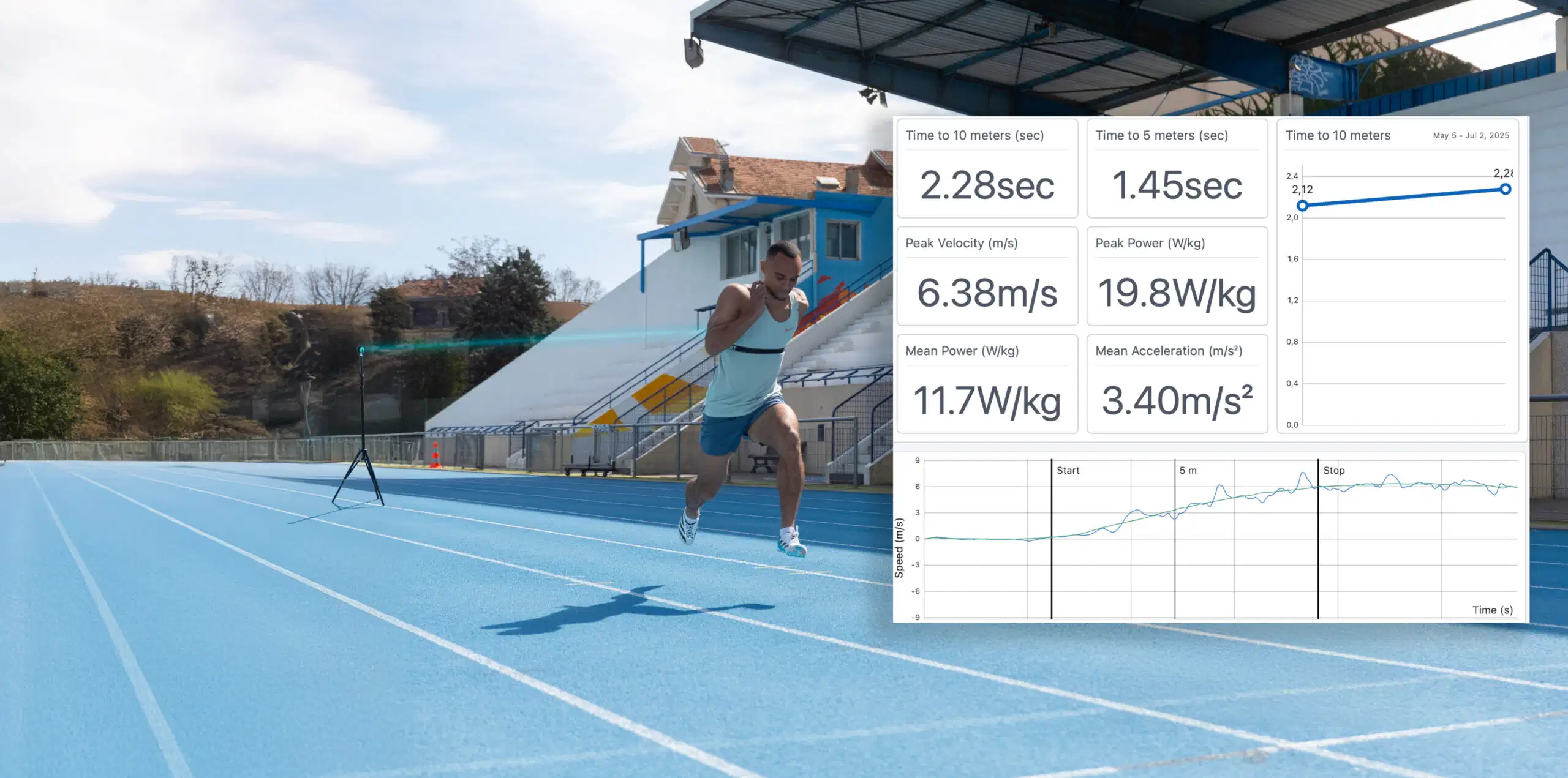
Kinvent's sprint view puts the six split and power fields at the top, a session trend for time to 10 meters beside them, and the speed trace underneath with the start, the 5 meter mark and the stop called out on the timeline. Nobody has to hold a stopwatch or re-key a number into a spreadsheet.

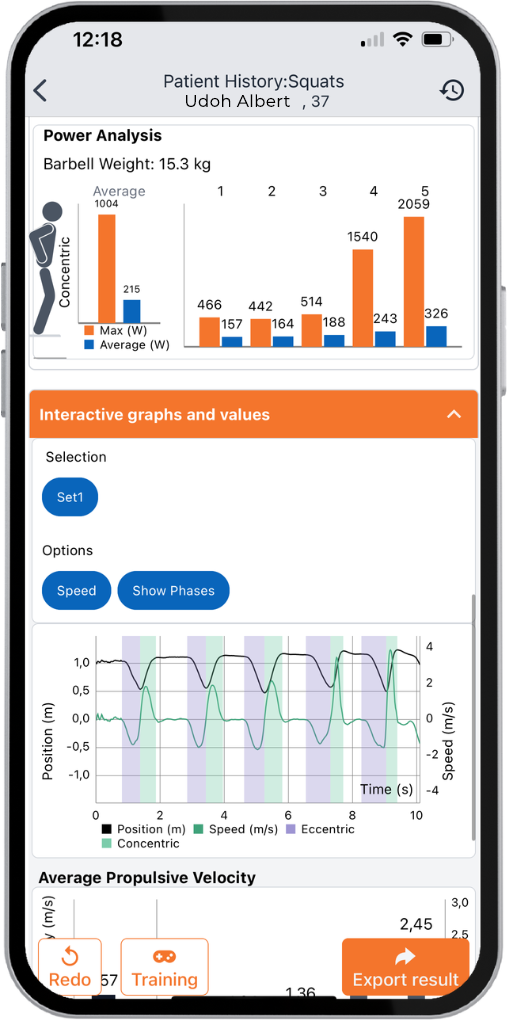
The squat view opens on a power analysis block: barbell weight at the top, then max and average watts for every repetition in the set beside the concentric averages for the whole set. Below it sits an interactive graph with position in meters and speed in meters per second on the same time axis, and a Show Phases toggle that shades eccentric and concentric separately. Average propulsive velocity gets its own chart under that, and the whole report exports out of the app.
What You Get Back
Two modes, one sensor, and a short list of outputs in each. Everything below is a value Kinvent list for the device.
Mode By Mode

Sprint Mode reports top speed for the run, with average and peak power alongside it. Kinvent state the split distances need no setup, which is what lets a timed run drop into a session that was built around something else. The same run feeds the force-velocity profile the app calculates.

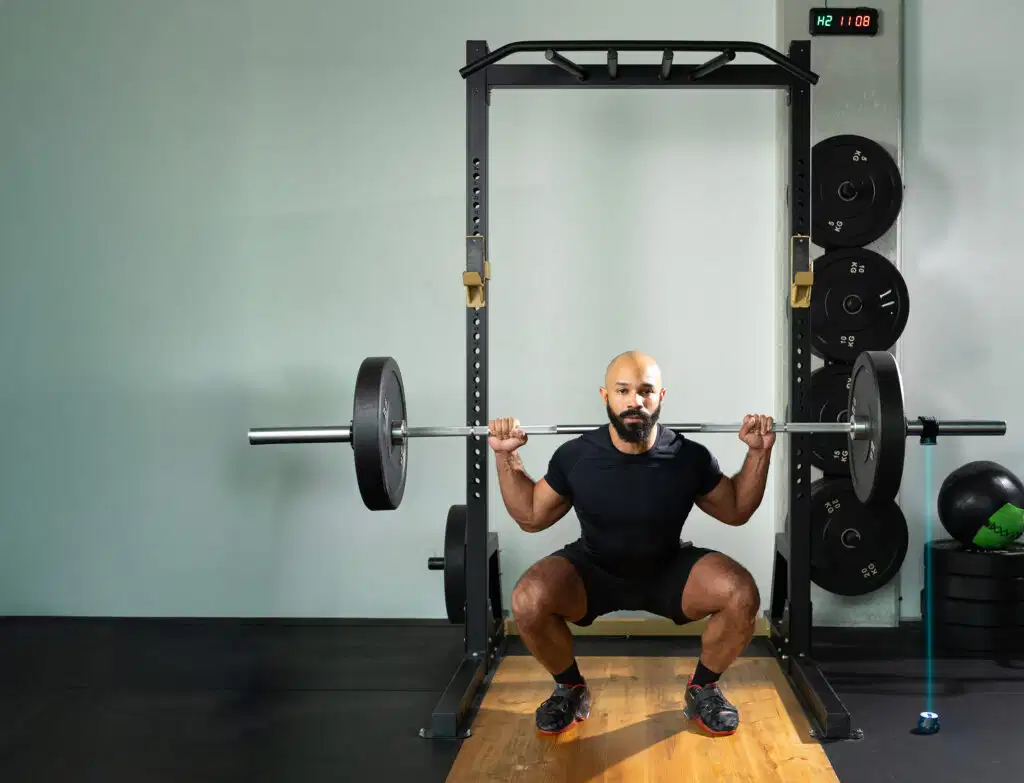
VBT Mode reports the average speed of the bar for each repetition, which is the figure a coach reads to set load and to see how hard a lifter is driving. Average and peak power arrive with it, and range of motion records how far the lift travelled. The color and audio feedback lands while the set is still running.

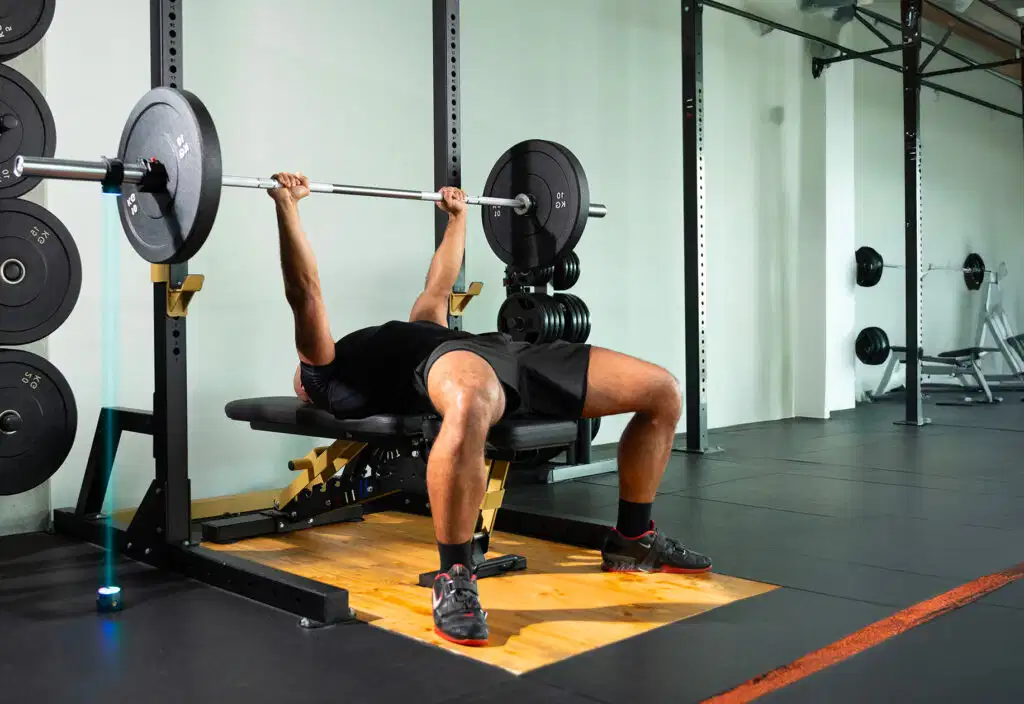
VBT Mode is not tied to the squat rack. Kinvent show K-Power running on the bench press, where average bar speed per repetition and range of motion answer the same question they answer under a squat bar: did the load move the way it was supposed to move, and did depth hold up as the set went on.
Test Protocols
The app ships test templates, not just a raw capture screen. Each of these is a named protocol in Kinvent's own K-Power material.
Where It Gets Used

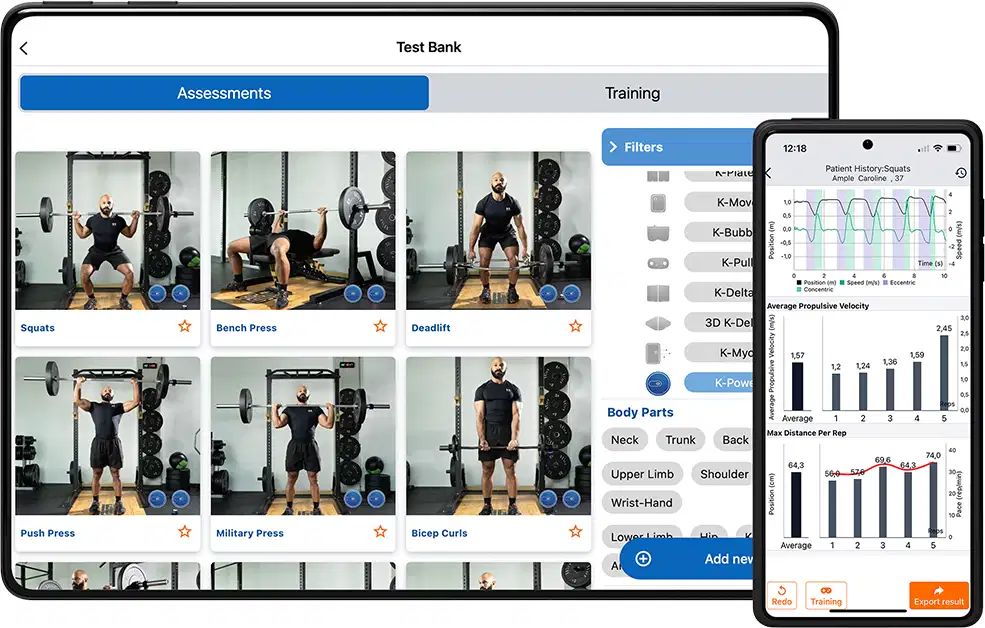
K-Power pairs with the Kinvent app, the same application the rest of the range connects to. A sprint run, a squat set and a reading from a force plate or a dynamometer sit under one athlete profile, so the sensors do not each come with their own record to reconcile. The app runs on phone and tablet, and Kinvent publish it on both the Apple App Store and Google Play.
Motion And EMG
Three Kinvent sensors work outside the force family. K-Power follows a body or a bar through space, K-Move measures the angle a joint reaches, and the K-Myo pair reads muscle activation at the skin.


Full Spec Sheet
Trusted & Certified
These are the certifications and registrations Kinvent publish for their platform and their quality and information security systems. They cover the company and its medical device and data handling, not a performance claim about this sensor.
Who Uses Kinvent
Kinvent name the following among the organizations working with their sensors. The list is theirs, published on their own K-Power page.
Questions